

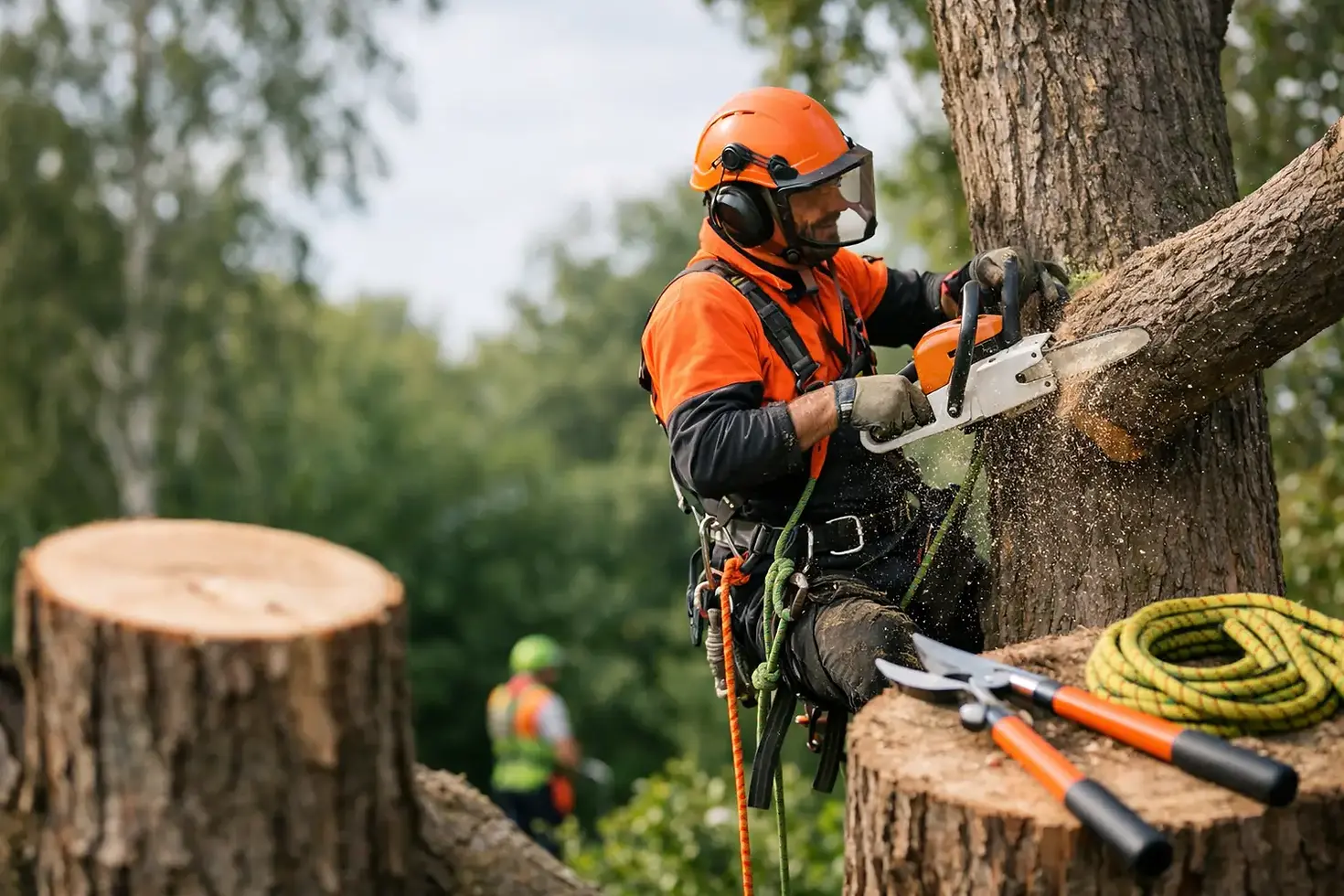
What Is BS3998 Tree Work?
If a tree surgeon says their work is carried out to BS3998, that should tell you something useful straight away - they are not guessing, cutting for speed, or treating every tree the same.
BS3998 is the British Standard for tree work recommendations. In simple terms, it sets out good practice for pruning, crown work, tree removal and aftercare, so trees are managed safely and responsibly. For homeowners, landlords and site managers, it is one of the clearest signs that a contractor is taking tree care seriously.
What is BS3998 tree work?
When people ask what is BS3998 tree work, the short answer is this: it is tree surgery and arboricultural work carried out in line with the recognised British Standard for tree work.
That covers more than just how branches are cut. It also looks at why work is being done, whether it is appropriate for the species, how much live growth should be removed, how wounds should be minimised, and when a tree should be retained rather than over-pruned or felled. The standard encourages an assessment-led approach, not a one-size-fits-all one.
In practice, BS3998 helps guide decisions on jobs such as crown reduction, crown thinning, crown lifting, deadwood removal, formative pruning and tree removal. It also supports the wider aim of preserving tree health, structural stability and amenity value wherever possible.
Why BS3998 matters to property owners
Most customers are not expected to know the finer points of pruning cuts or branch unions. What they do need is confidence that the work will be done safely, sensibly and with proper care for the tree and surrounding property.
That is where BS3998 matters. It creates a benchmark. Instead of relying on vague promises like “we’ll trim it back” or “we’ll take the top off”, the contractor should be working to a recognised standard with clear reasoning behind the method used.
This is especially important when a tree is close to a house, road, footpath, fence, outbuilding or neighbouring garden. Poor tree work can leave a tree stressed, unstable, disfigured or more likely to fail later. It can also create disputes if the end result is harsher than expected.
A BS3998-led approach reduces that risk. It pushes the work towards what is necessary and appropriate, not what is quickest.
What BS3998 covers in real tree surgery
BS3998 is broad, but for most domestic and commercial customers, it influences a few key areas more than anything else.
Pruning cuts and branch removal
One of the basics is where and how cuts are made. A proper cut helps the tree respond naturally and limits unnecessary damage. Poor cuts can leave long stubs, tear bark, increase decay risk or remove more tissue than needed.
The standard supports careful pruning that respects the tree’s natural growth points and structure. That sounds technical, but the practical result is straightforward - cleaner work and a better chance of healthy regrowth.
Crown reduction, thinning and lifting
These are common services, but they are often misunderstood.
Crown reduction is not simply chopping everything back evenly. Done properly, it reduces the overall size of the crown while keeping a natural shape. Crown thinning is about selectively removing secondary growth to reduce density, not stripping out the tree. Crown lifting raises the canopy clearance, often over drives, roads, gardens or footpaths.
BS3998 helps guide how much should be removed and how the finished tree should look. That matters because overdoing any of these operations can stress the tree or leave it poorly balanced.
Deadwood and safety work
Removing dead, dying or dangerous branches is often necessary, particularly over public areas or places with regular foot traffic. The standard supports proportionate safety work while still avoiding unnecessary removal of healthy growth.
There are times when deadwood has ecological value, especially in lower-risk settings. So again, the right answer depends on the tree, its condition and what is beneath it.
Tree removal
BS3998 is not anti-removal, but it does not treat felling as the first option for every problem. If a tree is dead, dangerous, diseased beyond reasonable management, or unsuitable for its setting, removal may be justified. But if the issue can be addressed through pruning or management, that should be considered first.
That approach tends to suit customers well. It means recommendations should be based on condition and safety, not on selling the biggest job.
BS3998 is guidance, not a shortcut answer
A useful point to understand is that BS3998 does not mean every tree gets the same treatment. Quite the opposite.
Two oak trees of similar size might need completely different work depending on age, condition, previous pruning, surrounding targets, species habits and long-term management aims. The standard gives a framework for good decision-making, but it still relies on competent assessment.
That is why qualifications and site experience matter alongside compliance. A contractor can mention BS3998, but they still need the training and judgement to apply it properly.
What BS3998 does not mean
It helps to clear up a few common assumptions.
BS3998 does not mean a tree can never be reduced hard. In some situations, more significant pruning may be justified. Storm damage, structural defects, clearance requirements or previous poor management can all affect what is appropriate.
It also does not mean every tree must be preserved at all costs. If a tree presents an unacceptable risk, is in irreversible decline, or is causing serious and unresolvable issues, removal can still be the right recommendation.
And it does not replace legal checks. Trees may be subject to Tree Preservation Orders or be within a conservation area, so permissions may still be required before work starts.
How to tell if a contractor really works to BS3998
The phrase gets used a lot, so it is fair to ask what it looks like in practice.
A contractor following BS3998 should be able to explain what work is recommended and why. They should talk in clear terms about the tree’s condition, the objective of the job, and whether the proposed cuts are suitable for that species and location. You should not feel rushed into unnecessary felling or be offered vague, aggressive pruning without any proper explanation.
You should also expect signs of wider professionalism - appropriate qualifications, safe working methods, proper insurance, and a tidy, respectful approach on site. Standards in tree work are not only about the final cut. They are also about how the whole job is planned and carried out.
For many customers, this is where a specialist contractor stands apart from a general labourer with a chainsaw.
Why standards matter more after storms or urgent call-outs
Emergency tree work is one of the times standards matter most. When a tree is split, uprooted, hung up or shedding branches, the pressure is understandably on speed. But rushed decisions can make a dangerous situation worse.
BS3998 still has value here because it supports controlled, proportionate work. Sometimes that means making the site safe first and returning for a fuller programme of work once the immediate risk has been dealt with. Sometimes it means partial retention where a tree can still be managed safely instead of removed entirely.
Good emergency work is not just fast. It is calm, assessed and properly executed.
Does BS3998 affect cost?
It can, but not always in the way people assume.
A contractor working to recognised standards may not be the cheapest quote. Careful pruning, proper rigging, safe access and qualified staff all come at a cost. But very cheap tree work often becomes expensive later if it causes damage, leaves a tree unstable, or creates a need for corrective work.
On the other hand, BS3998 does not automatically mean a larger bill. In some cases, a proper assessment leads to less work than the customer first expected. A tree that someone thought needed heavy reduction may only need deadwood removal and minor pruning. Honest advice can save money as well as protect the tree.
A better question than “can you cut it back?”
If you are arranging tree work, one of the best questions to ask is not “how much can you take off?” but “what does this tree actually need?”
That shift matters. It moves the conversation away from cutting for appearance alone and towards safe, suitable management. Whether the aim is more light, better clearance, lower risk, or a tidier shape, the method should fit the tree.
At STN Trees & Landscaping, that is the value of working to recognised standards such as BS3998 - customers get clear advice, safe workmanship and recommendations based on what is right for the tree and the property, not what is easiest on the day.
If you are unsure about a tree in your garden or on a managed site, a proper assessment is usually the best place to start. The right work is not always the most dramatic - it is the work that solves the problem without creating a new one.


Comments